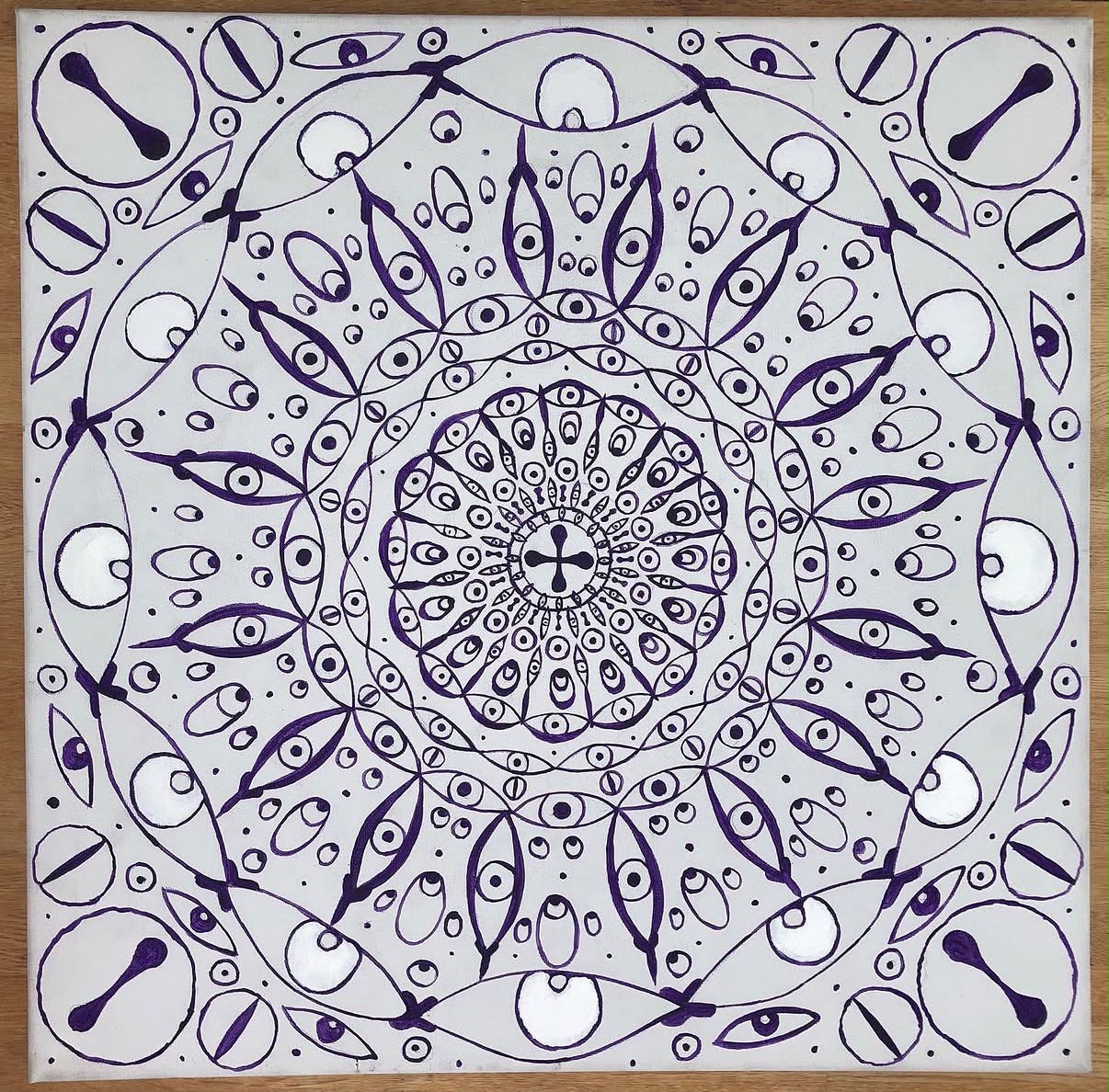
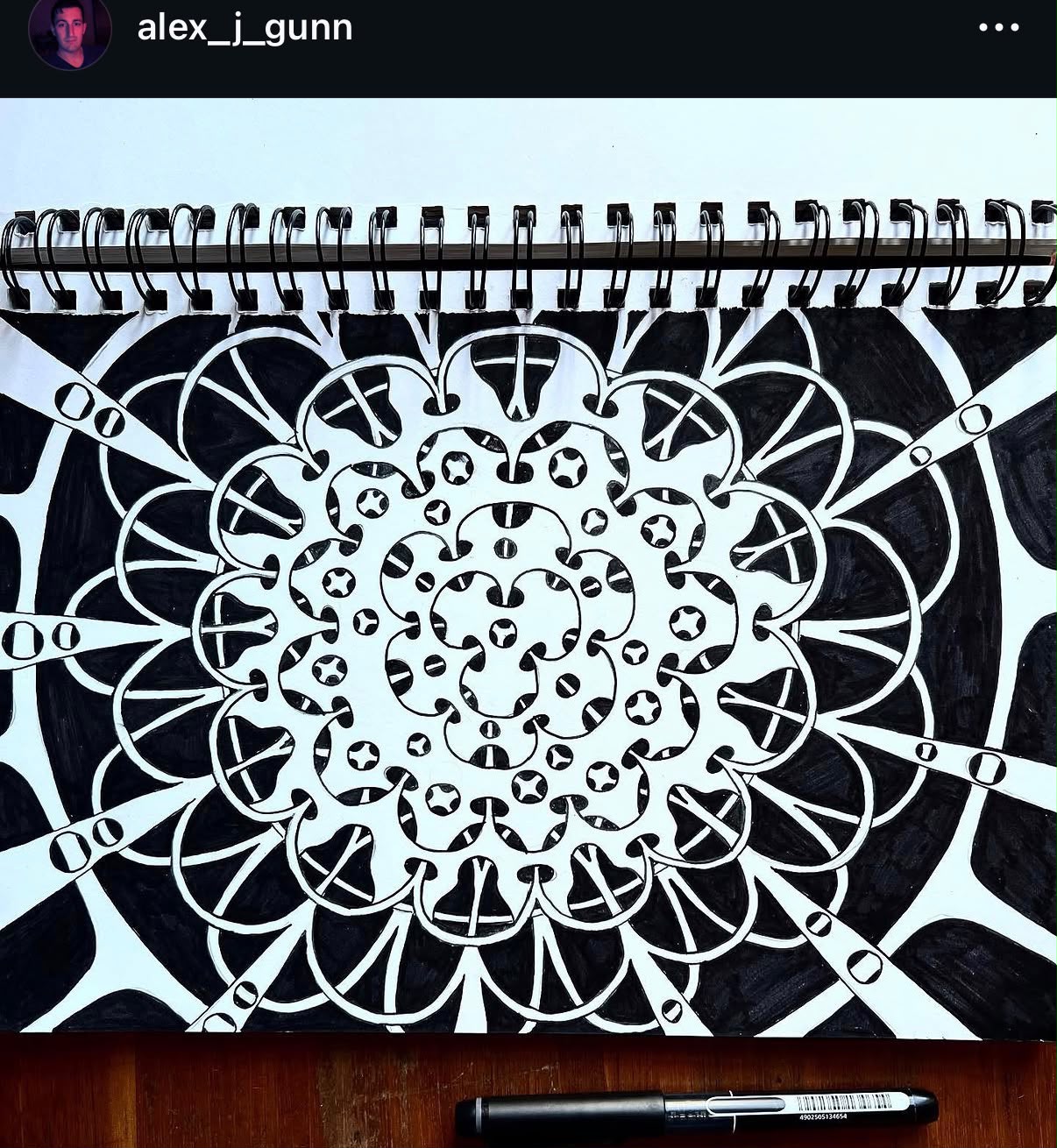
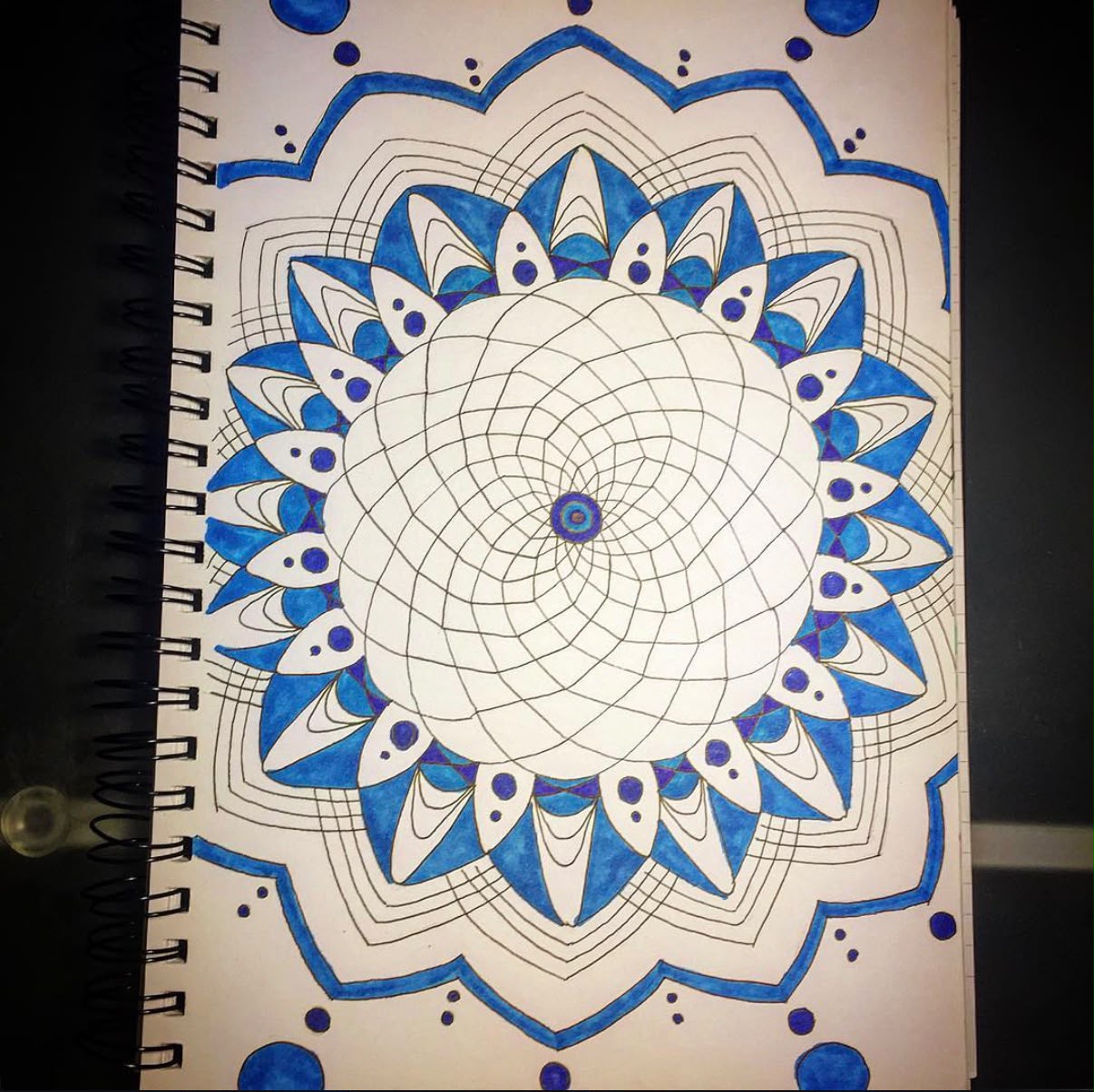
There is something quietly compelling about drawing a mandala. At first it appears to be nothing more than circles, symmetry and repeated patterns. Yet the longer you spend with it, the more it becomes an exercise in attention rather than simply making an image.
The psychiatrist Carl Jung saw the mandala as a symbol of the Self. The circle represents wholeness, while the centre represents the individual. Beginning from that centre and gradually working outwards, patterns begin to emerge that often surprise the person creating them. Rather than imposing meaning from the outset, the act of drawing itself becomes a way of discovering it.
In Buddhist traditions, mandalas take on a different role. They are used as objects of contemplation and discipline, encouraging patience, concentration and an awareness of the present moment. Their intricate geometry reminds us that beauty often arises from careful repetition rather than sudden inspiration.
For me, they are also something much simpler. They are an enjoyable way to practise penmanship, freehand geometry and ornamental drawing. A page, a pen and a little time are all that is needed. Over time, simple circles become interlocking knots, repeating motifs and increasingly intricate patterns. There is no pressure to create a masterpiece; the satisfaction lies in watching complexity emerge from a few simple lines.
Perhaps that is why mandalas have endured across so many cultures. Whether viewed as symbols of the psyche, tools for meditation or simply an enjoyable drawing exercise, they all begin in exactly the same place: a single point at the centre, with everything else growing naturally from it.